The Gacha Pull Is Not the Product. The Progression Loop Is.
 Charles J. (CJ) Dyas
Calling gacha a “masterclass in addiction” sounds appropriately serious and explains almost nothing. Variable rewards. Loss aversion. Sunk costs. FOMO. Those concepts can help describe player behavior, but dropping their names beside a purchase screen is not analysis. It is closer to pointing at a casino and saying “dopamine.”
The interesting part of a game like Zenless Zone Zero is not that a randomized reward can be exciting. We have known that for a while. The interesting part is how many systems have to cooperate before one pull feels worth making, and how quickly the game turns the result into another problem for the player to solve.
The pull animation is the loudest part of the transaction. It is not the product. The product is the loop around it.
The pull starts long before the button
By the time a player reaches a limited Signal Search channel, the game has already done most of the selling.
The character has a silhouette, movement language, combat role, voice, faction, and place in the story. Trailers show the fantasy at its cleanest. Trial stages remove the friction of an unfinished build and let the character perform under ideal conditions. Story missions turn a set of combat abilities into someone the player recognizes.
That distinction matters. The random draw does not create desire. It delivers, delays, or denies desire that the rest of the product has been building for days or weeks.
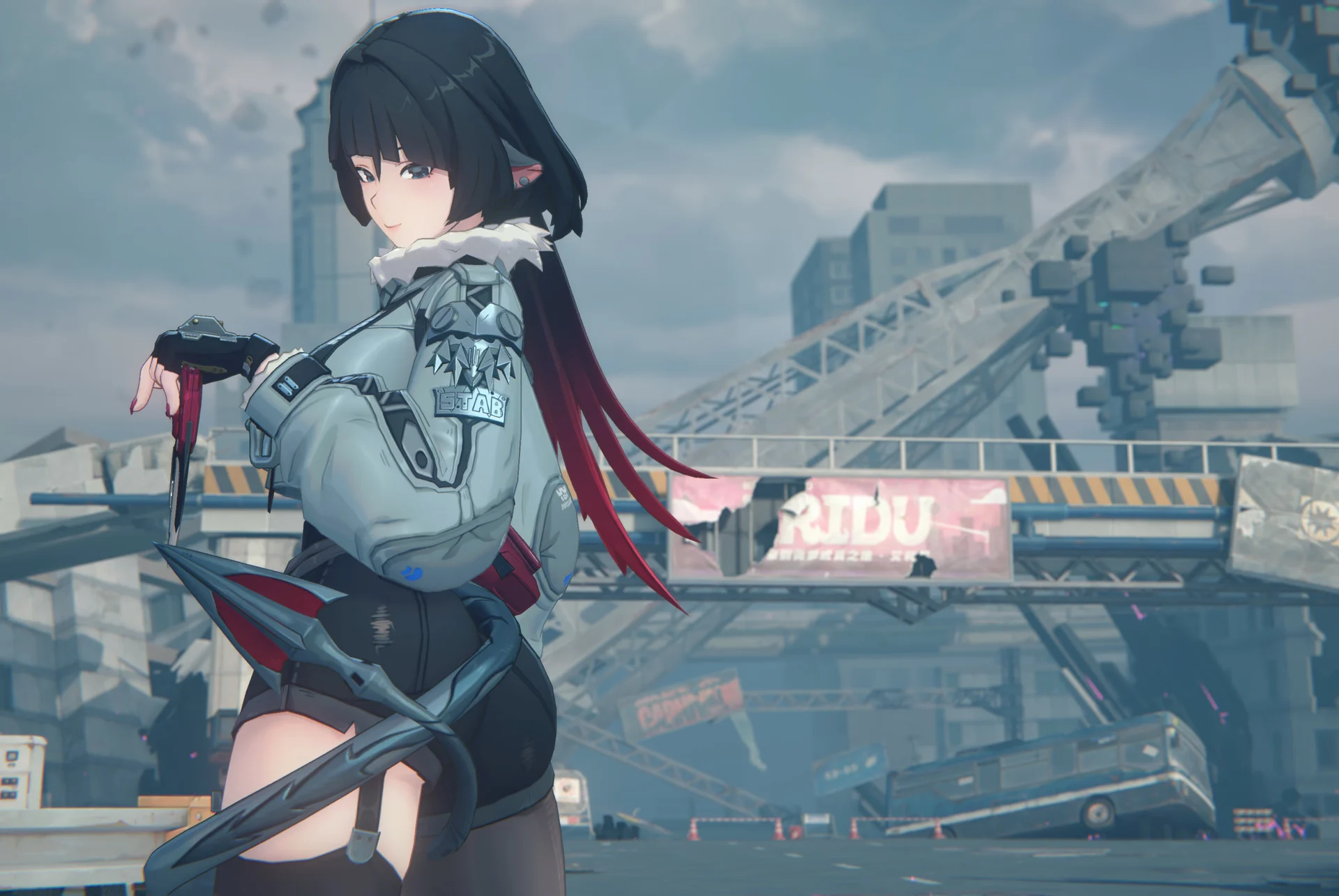
This is why describing characters as “rewards” feels incomplete. A reward is usually downstream of an action. Here, the character is also marketing, narrative content, a future team composition, and a reason to return. The same object moves through several parts of the product before it ever appears as a result tile.
It is good systems design. It is also why a banner cannot be evaluated in isolation. Looking only at the odds screen is like reviewing a checkout flow without looking at the product page.
Pity turns randomness into a project
Pure randomness is hard to plan around. Gacha systems make it more manageable with guarantees commonly called pity: after enough unsuccessful searches, a high-rank result is guaranteed. Featured channels add their own rules about whether that result will be the promoted character, and the game exposes those rules in the channel details.
The exact thresholds matter to players, but the more important UX decision is that failure can still advance a state.
After an unsuccessful pull, the account is not merely missing a character. It is closer to a guaranteed result than it was before. That makes each attempt feel less like a discarded lottery ticket and more like another filled segment in a progress bar, even when the interface does not draw that progress bar directly.
This changes the question in the player's head. “Should I gamble on this?” becomes “Can I finish this before the channel ends?” The second question is easier to budget, easier to discuss, and much easier to rationalize because the player can point to progress already made.
The guarantee is genuinely useful consumer information. It bounds one kind of uncertainty and gives players a way to plan saved resources. But transparency is not neutral just because it is better than opacity. A legible guarantee can protect a player from an endless losing streak while simultaneously making an unfinished sequence feel like owned progress.
That tension is more useful than calling the whole thing a sunk-cost fallacy. The interface is not tricking a player into imagining progress. The progress is real. It is just progress toward another opportunity to transact.
The currency path softens the price signal
There is no single “buy character” button in Zenless Zone Zero. Money can become paid currency. Currency can become Polychrome. Polychrome can become tapes. Tapes become searches. Some of those resources also arrive through play, events, maintenance compensation, and daily activity.
Each conversion is understandable on its own. The complete path is harder to hold in your head.
That is the point where the interface stops behaving like a normal price tag. A price tag preserves a stable relationship between an item and money. A currency stack asks the player to repeatedly translate between units, while bundles leave remainders that do not map neatly back to a purchase. The game can show every exchange accurately and still make the total cash value less immediate at the moment of a pull.
Mixing earned and purchased resources complicates the signal further. Once both routes converge on the same tape, a search can be partly the result of time and partly the result of money. The unit is clean. Its cost is not.
This is one reason “microtransaction” is too vague to be a useful critique. The size of one purchase is less revealing than the distance between the purchase and the thing the player actually wants. Every extra denomination, bonus, and leftover balance changes how visible the price remains across that distance.
I would rather inspect that conversion path than speculate about whether an individual player is being irrational. The path is observable. It can be diagrammed, tested, and redesigned.
Winning opens another bill
The search result screen is designed like a conclusion. The animation resolves. Rank colors appear. Results line up as a collection. The player gets a clean summary of what changed.
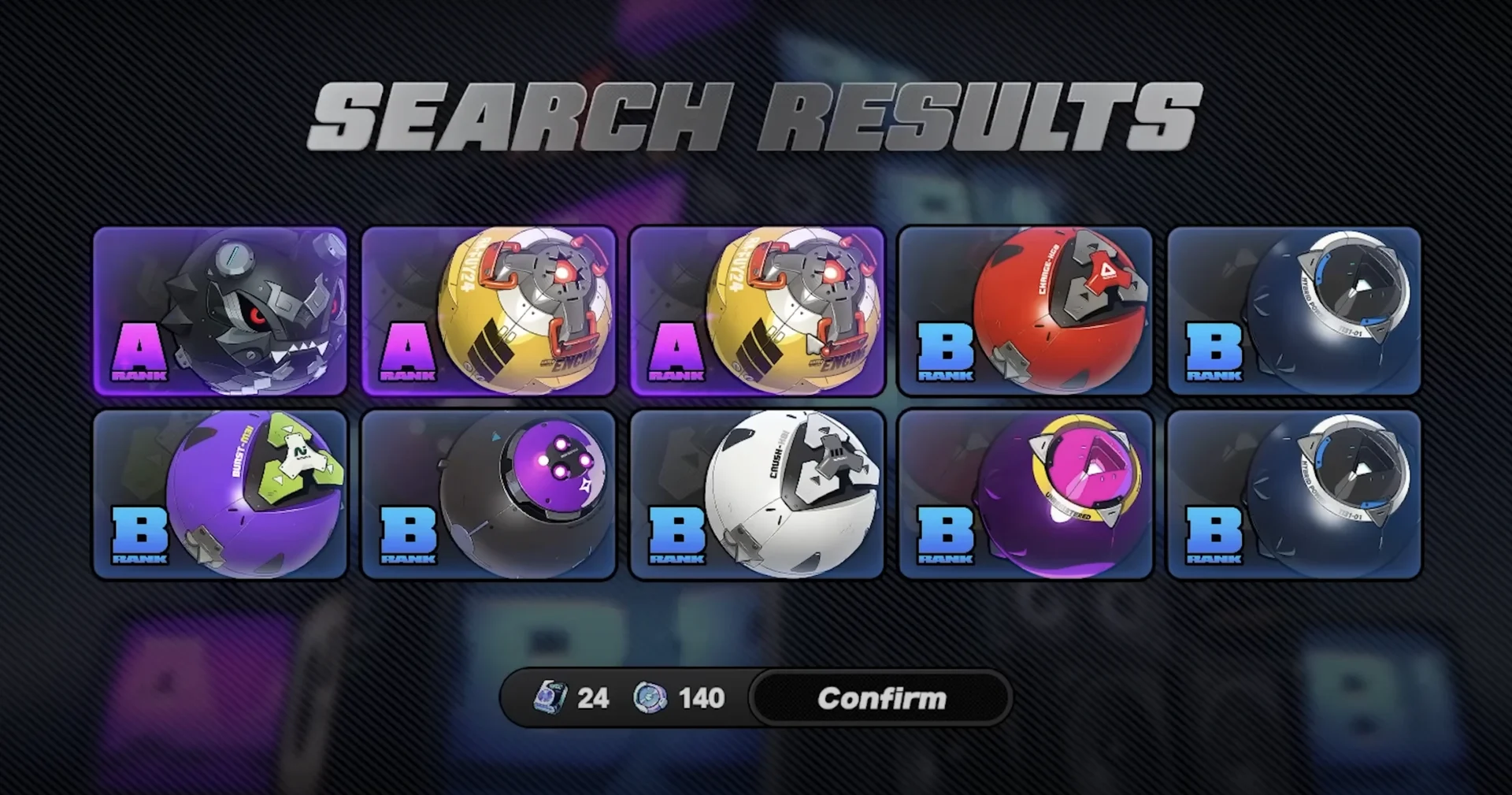
In the larger system, this is a handoff.
A new agent arrives with levels, skills, promotion materials, a W-Engine, Drive Discs, and team relationships still unresolved. The character may be owned immediately, but the version shown in a trailer or trial stage is now a progression target. Energy-gated materials connect that target back to daily play. Team composition can make an older character newly relevant or expose another missing role. Duplicate results are not simply thrown away either; the system redirects them into character progression or currencies that feed future searches.
This is the cleverest part of the loop. Success does not remove the player's goal. It changes the goal's type.
Before the pull, the player is trying to acquire a character. After the pull, they are trying to realize the character. Acquisition creates a backlog, and that backlog gives routine activities a purpose. Daily tasks produce resources. Resources improve the new character. The improved character makes new combat strategies possible. New content then supplies another stage, enemy, or character that rearranges the backlog.
None of this works if the game underneath it is bad. Strong combat, animation, sound, and character design are not decorative wrappers around monetization. They create the value the monetization system is trying to capture. Saying that players return only because they are “hooked” dismisses the craft in the game and the agency of the people playing it.
It also makes the design critique weaker. The uncomfortable version is that a system can be fun, transparent in many of its rules, and financially risky at the same time.
The ethical line is in the surrounding system
Research on loot boxes gives us a reason to take that risk seriously, but not a license to overstate what we know. A large survey of 7,422 players found a relationship between loot-box spending and problem-gambling severity. The authors were explicit that the result was correlational and did not establish which behavior caused the other. A later study replicated a significant association. The original survey is worth reading with its limitations intact.
For a designer, the responsible questions are therefore more specific than “is gacha addictive?” How many conversions separate money from an attempt? Is the cash equivalent visible when a player is deciding, not buried in a store? Does the guarantee help set a limit, or mainly advertise how close the next result feels? What happens after a loss? What happens after a win? Can someone pause without abandoning a state they have already paid to advance?
Those questions keep the critique attached to decisions a product team can actually change. Clearer price equivalents, useful spending histories, cooling-off controls, and less punitive expiration would not remove excitement from the game. They would change who carries the cost of that excitement.
“Good UX” is not a useful verdict here. The system is too coherent for that phrase and too conflicted for the compliment.
The animation lasts a few seconds. The expensive design work is everything that made the result feel inevitable, then immediately made it unfinished.